


Embedded parts are metal connecting components pre-embedded in concrete structures. They are usually made of materials such as steel plates, structural steel, or reinforcing bars, and are integrated with the structure through welding, anchoring, etc. They are used to transfer loads, improve connection reliability, and provide a foundation for subsequent installation.
Embedded parts come in various structural types. Common types include:
Flat-plate embedded parts (such as claw-type embedded parts) are welded together from anchor plates and anchor bars. The anchor bars can be processed into straight, curved, or hook shapes. They have a simple structure, high load-bearing capacity, and are suitable for heavy-duty applications.
Channel-type embedded parts consist of metal channels and anchor bars. They are compact, with anchor bars arranged in a single row, making construction convenient and cost-effective, but their load-bearing capacity is relatively limited.
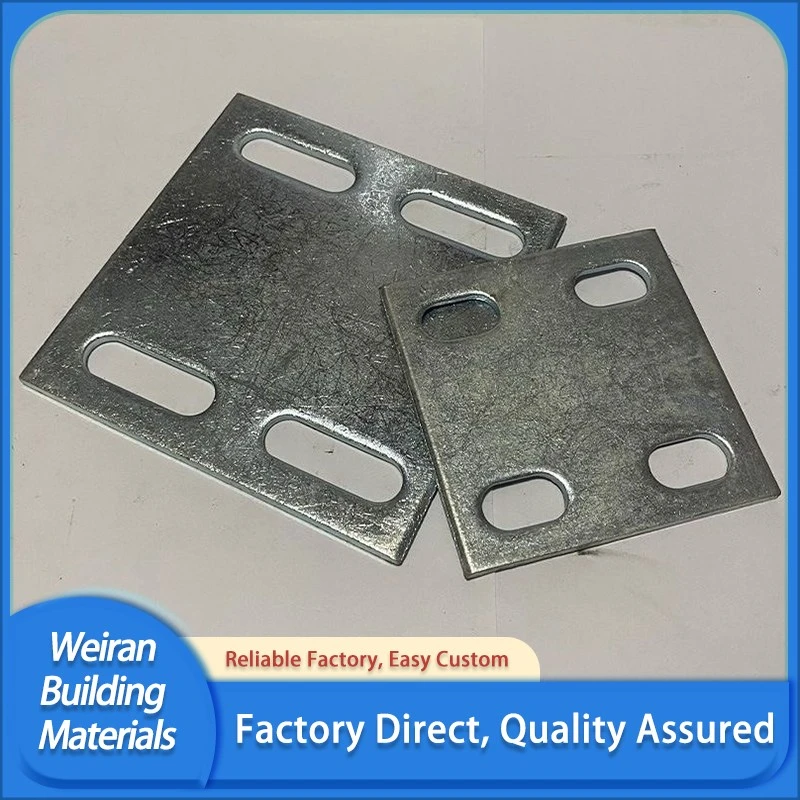
Embedded parts with pre-reserved slots on the anchor plate allow for flexible adjustments during installation, making them highly adaptable. In terms of characteristics, embedded parts have the following features:
Load-bearing capacity: Flat plate embedded parts have higher tensile and shear load-bearing capacity (e.g., tensile design value of approximately 140kN, shear value of approximately 55kN), suitable for large-span curtain walls or complex loads; channel-type embedded parts have lower load-bearing capacity (tensile strength of approximately 32kN, shear strength of approximately 23kN), but can meet the needs of general curtain walls;
Construction convenience: Channel-type embedded parts are small in size and light in weight, less likely to interfere with structural reinforcement, and can be installed without welding (connected by T-bolts), shortening the construction period; flat plate embedded parts require on-site welding, which is flexible in adjustment but complex in process;
Economy: Channel-type embedded parts use less material and have high processing efficiency, with a cost approximately half that of flat plate embedded parts, helping to save on project costs;
Durability and corrosion resistance: Surface treatment can be done by applying anti-rust paint or hot-dip galvanizing to enhance corrosion resistance and adapt to different environmental requirements.